From the groundbreaking Ferrari F80 to the revolutionary Lamborghini Revuelto, 2025 delivered some of the most extraordinary supercars in automotive history. Here's our definitive ranking of the year's finest machines.
2025 will be remembered as a watershed year for supercar enthusiasts. As we close out this remarkable chapter, the automotive world has witnessed unprecedented innovation, with manufacturers pushing the boundaries of performance, design, and hybrid technology. What follows is our definitive look at the supercars that defined this extraordinary year.
The Ferrari F80 Arrives
Ferrari's long-awaited LaFerrari successor arrived with all the drama befitting Maranello's flagship. The F80 combines a twin-turbocharged V6 with three electric motors to produce a staggering 1,184 horsepower, propelling the carbon-fiber masterpiece from 0-100 km/h in just 2.1 seconds. Limited to just 799 units at €3.6 million each, the F80 sold out within hours of its announcement.
The car's aggressive aerodynamic design features active elements throughout, representing Ferrari's most advanced road car ever. More than just fast, the F80 makes a definitive statement about where hypercars are headed. It's a machine that somehow manages to look back at Ferrari's racing heritage while simultaneously pointing toward an electrified future.
Lamborghini's Hybrid Revolution
Sant'Agata's first plug-in hybrid supercar marks the end of an era—sort of. The Revuelto pairs a new 6.5-liter V12 with three electric motors for a combined 1,001 horsepower. What matters most to Lamborghini faithful is that the screaming V12 still revs to 9,500 rpm, delivering the emotional experience they've come to expect.
At $608,358, the Revuelto proves that electrification doesn't mean compromising on the visceral supercar experience. Driving one reveals that Lamborghini has masterfully preserved the drama while adding a new dimension of instant electric torque. It's the perfect bridge between the brand's storied past and its electric future.
McLaren's Ultimate Statement
McLaren's "W1" designation—referencing its Woking headquarters—signals the significance of this hypercar. With 1,258 horsepower from a twin-turbo V8 and electric motors, the W1 is the most powerful road car McLaren has ever built. The car features the brand's most advanced aerodynamics, generating 1,000 kg of downforce at 280 km/h through an active rear wing and front flaps that work in concert with an AI-controlled suspension system reading the road 1,000 times per second.
Limited to 399 units at approximately $2.1 million, the W1 represents the pinnacle of what McLaren's engineers can achieve when given free rein to create without compromise.
The Porsche GT3 RS Evolves
The updated 992.2 GT3 RS builds on an already legendary formula. The 4.0-liter naturally aspirated flat-six produces 518 horsepower, but it's the aerodynamic package that truly sets this car apart. Producing up to 860 kg of downforce, the GT3 RS generates more downforce than it weighs—a first for any road-legal 911.
At $241,300, this represents the accessible end of the supercar spectrum, yet it delivers track performance that embarrasses cars costing twice as much. Porsche has somehow managed to make a car that's equally at home on a Sunday morning drive as it is setting lap records.
Celebrating the Manual Gearbox
In an era of lightning-fast dual-clutch transmissions, Aston Martin's Valour celebrates the art of rowing your own gears. The 715-horsepower twin-turbo V12 paired with a six-speed manual transmission is a deliberate throwback—and it's absolutely glorious.
Limited to 110 units with a price tag of $1.5 million, the Valour offers one of the last true analog supercar experiences. It's a rolling argument against the homogenization of the supercar world, proving that sometimes the old ways are worth preserving.
Bugatti's Post-Chiron Masterpiece
The Chiron successor arrived with a naturally aspirated 8.3-liter V16 producing 986 horsepower, supplemented by electric motors for a combined 1,775 horsepower. The top speed of 445 km/h is almost incomprehensible for a road-legal vehicle.
At €3.8 million for one of 250 units, the Tourbillon represents the pinnacle of internal combustion technology. Its naturally aspirated engine is a direct response to enthusiasts mourning the quad-turbo W16—and what a magnificent response it is.
The Formula 1 Car for the Road
After years of delays, the Mercedes-AMG ONE finally reached customer hands in 2025. Its Formula 1-derived 1.6-liter turbo V6 hybrid powertrain produces 1,049 horsepower and requires a complete engine rebuild every 50,000 km—just like Lewis Hamilton's race cars. Limited to 275 units at €2.275 million, the ONE is the closest any road car has come to being an actual F1 machine.
Speed Without Limits
Christian von Koenigsegg's speed-focused Jesko Absolut is theoretically capable of exceeding 531 km/h, making it the fastest road car ever built on paper. Its 5.0-liter twin-turbo V8 produces 1,600 horsepower on E85 fuel. With just 125 units at $3 million each, the Jesko Absolut represents the bleeding edge of what's possible in a road-legal vehicle.
Analog Excellence from Pagani
Horacio Pagani's Utopia proves that supercars can still be about more than numbers. While its 852-horsepower Mercedes-AMG V12 is impressive, the Utopia's real appeal lies in its manual transmission, artisanal construction, and utterly gorgeous design. At €2.2 million for one of 99 units, it's a rolling sculpture that happens to be devastatingly quick.
The Electric Benchmark
The Croatian Rimac Nevera continues to set the standard for EV performance. With 1,914 horsepower and a 0-100 km/h time of 1.85 seconds, it remains the quickest-accelerating road car ever made. At €2 million, the Nevera proves that electric supercars can deliver experiences impossible with internal combustion, with four-motor torque vectoring providing handling precision that conventional supercars simply cannot match.
Looking Ahead
As remarkable as 2025 has been, 2026 promises even more. The Lamborghini Temerario begins deliveries in January, while the Aston Martin Valhalla finally enters production. For supercar enthusiasts, these are golden times. Whether your preference is for screaming naturally aspirated engines, hybrid hypercars, or pure electric performance, the current era offers something extraordinary for every taste.
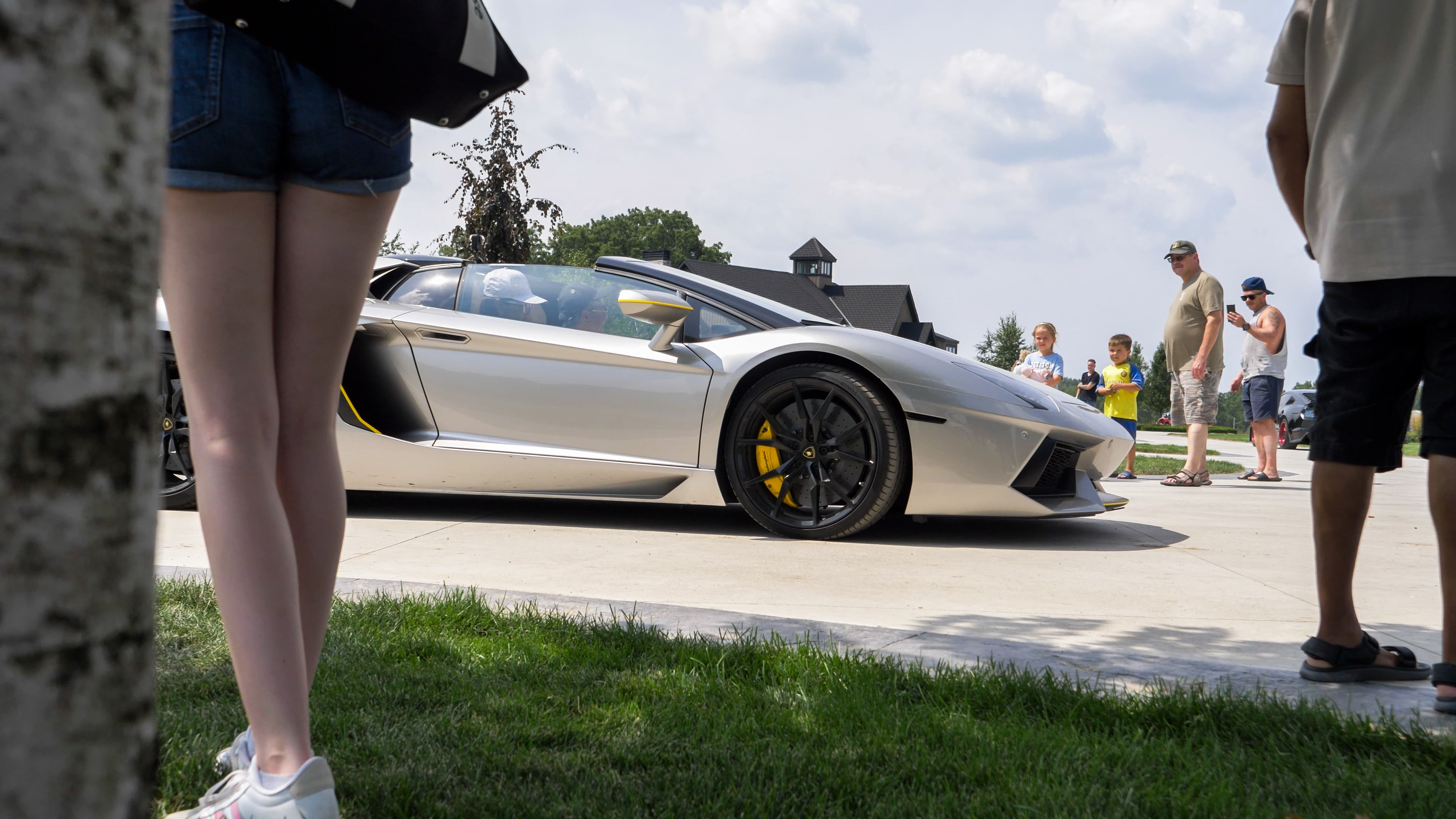
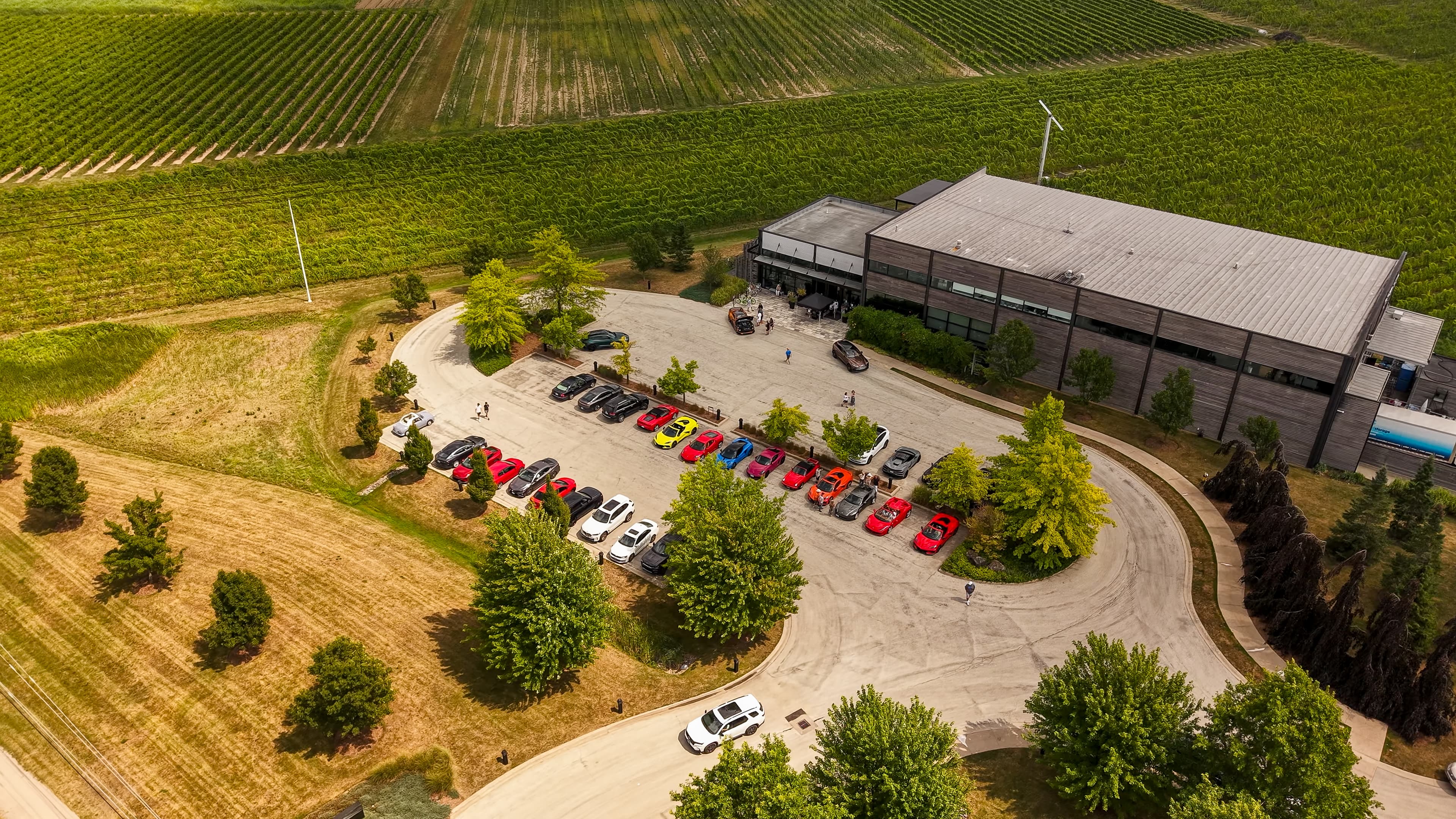
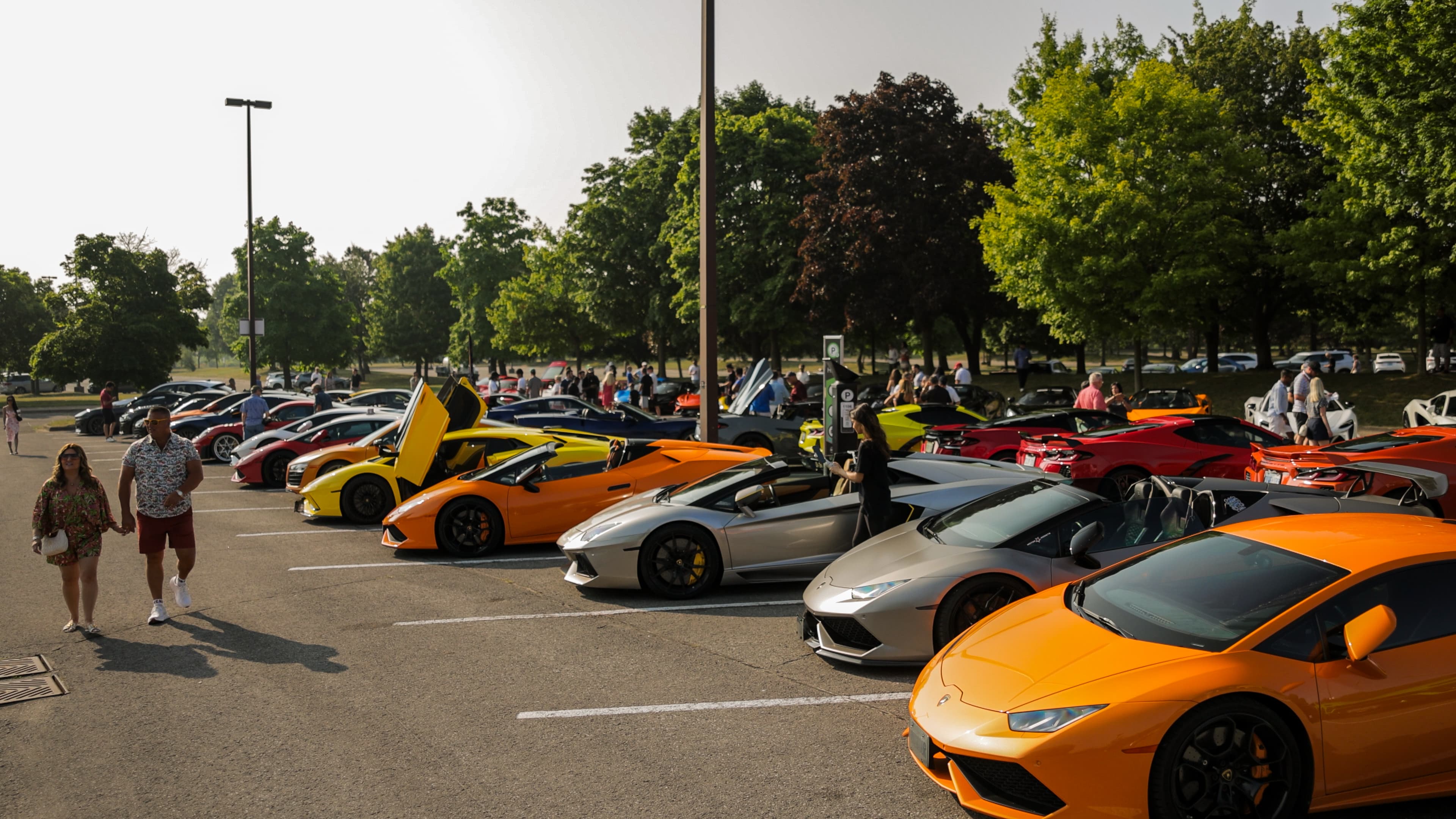
At Niagara 5000, we celebrate this golden age of supercars every September. Join us in 2026 to experience these incredible machines in person.
Share this article